Understanding Rural: Why Rural Missions Matter
How does RHMA define rural places, rural people, and the need for rural missions?
What is Rural?
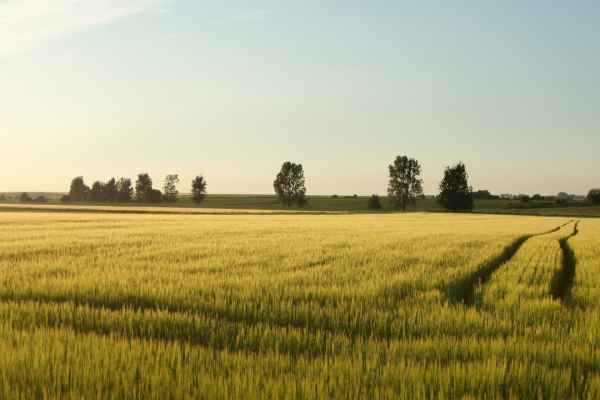
With “Rural” prominent in RHMA’s name, it is important to know what it means. Defining “rural” is not as easy as it might seem. In fact, U.S. government agencies don’t have a consistent definition. Historically in the U.S., “rural” was directly linked to extractive industries – primarily farming and ranching. In years past, these comprised the majority of the working class. But today, over 90% of the rural labor force in the U.S. is non-agriculture-related.
Besides extractive industries, “rural” today can mean such things as places with small populations, places that are isolated from goods and services, or even a person’s way of thinking. One fun definition that might actually be more accurate than some is “any place farther than five miles from a McDonald’s!”
RHMA keeps its definition of “rural” simple. Our rule of thumb is that our focus of ministry is open country communities in the U.S. with populations of 5,000 or less. Given the changing landscape of rural America, RHMA-kinds-of-places today include grain elevator towns, retirement communities, tourist towns, prison towns, manufacturing towns, bedroom communities, and college towns. Rural dwellers include both blue and white-collar workers—some who work in the area but many who commute to a job in a neighboring community, a growing number who work remotely, and a burgeoning number of retirees who are attracted to country living.
Very important to understand: Rural America today is not nearly as homogenous as it used to be. Even two rural towns a few miles apart can be quite different. The takeaway from this is that we do well to understand “rural” one community at a time. Someone has said, “If you’ve been to one small town . . . you’ve been to one small town.”
Why Rural Missions?
In a nutshell, the answer is because God loves the people who live there, and so should we. Rural places are included in the “all” and “remotest part” of Christ’s “Great Commission” (Matthew 28:19; Acts 1:8). Sadly, people in rural communities are often overlooked, perhaps because their populations are smaller or they are more isolated – fitting the adage: “out of sight, out of mind.”
Why rural missions? Because rural America today has some of the least-reached people in our country. It is estimated that there are about 175 counties in the U.S. that have fewer than 5% evangelical Christian residents. Most of these counties are rural. There are countries we send missionaries to today that have higher percentages of Christians. Rural America is a mission field begging for missionaries. Because of this, “missionary” is also prominent in RHMA’s name.
Why rural missions? Because there are countless towns – estimated in the thousands – in Rural America today that are void of vibrant, gospel-centered, Bible-teaching churches. It is communities like these that are RHMA’s primary focus and priority.
Ron Klassen is RHMA’s Executive Director Emeritus, after serving more than three decades as RHMA’s Director. He also serves as an adjunct faculty member at Dallas Theological Seminary, teaching master and doctoral classes for present and future rural and small-town pastors.